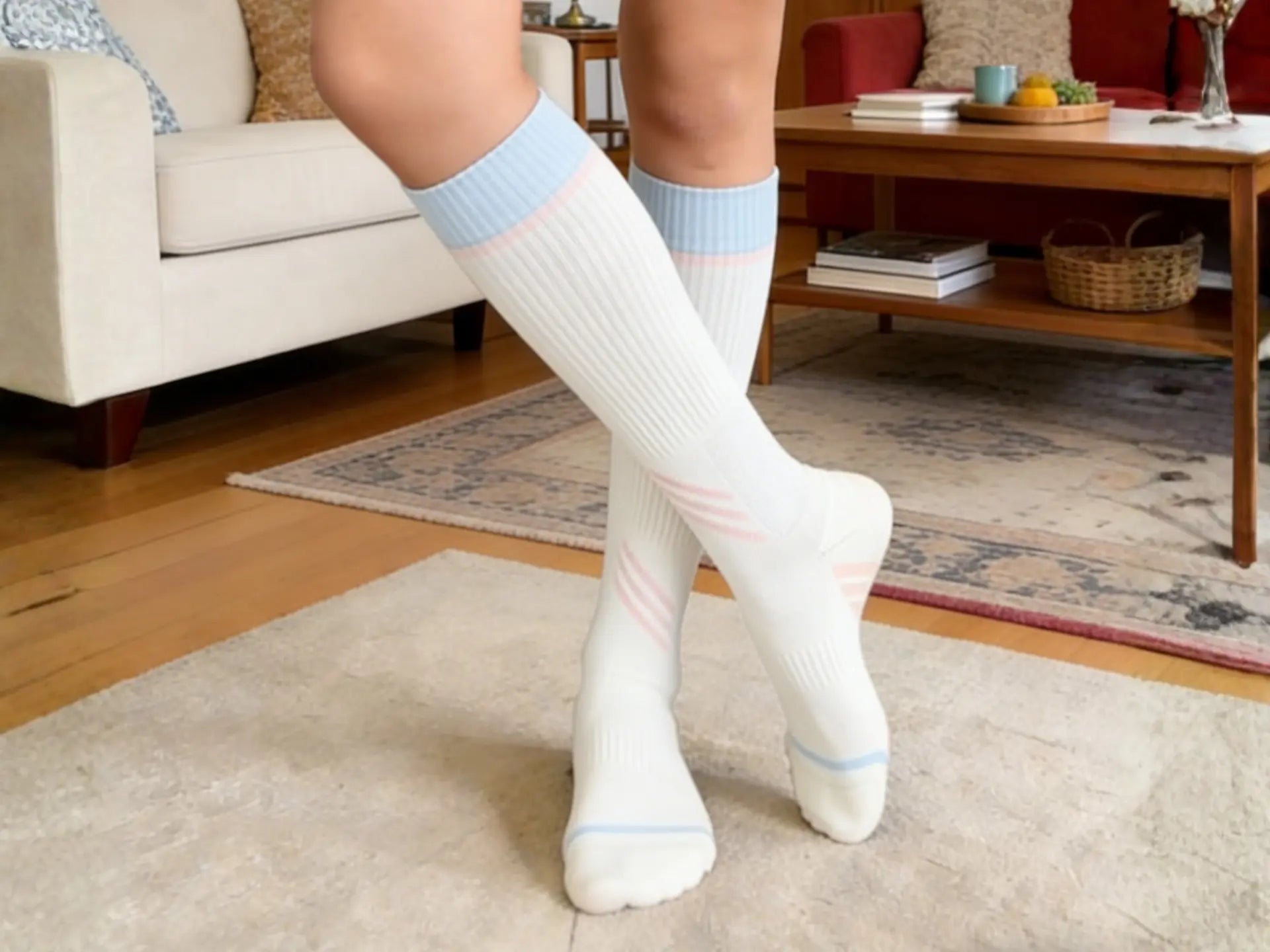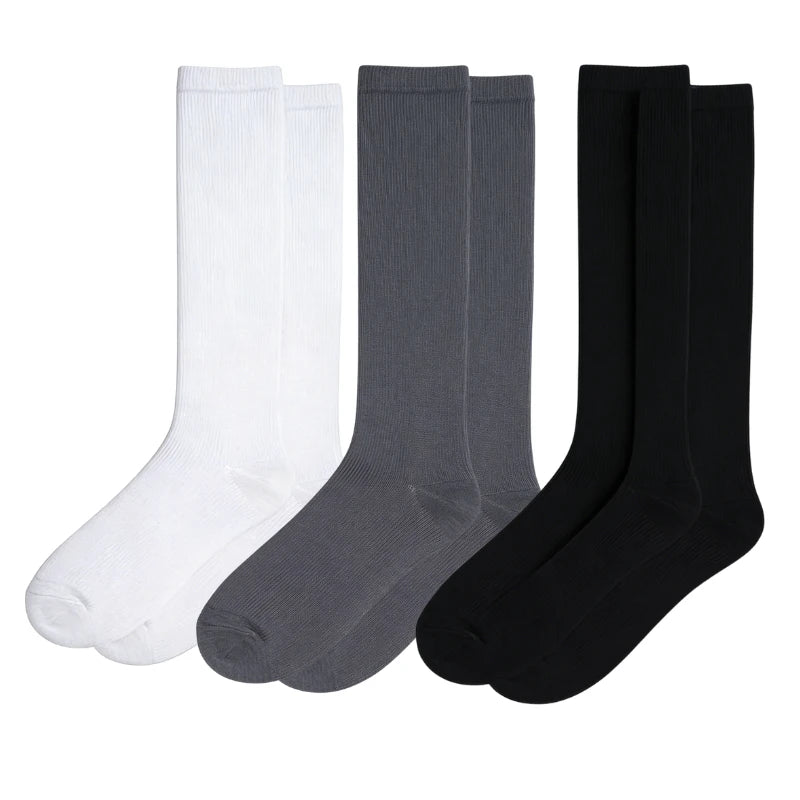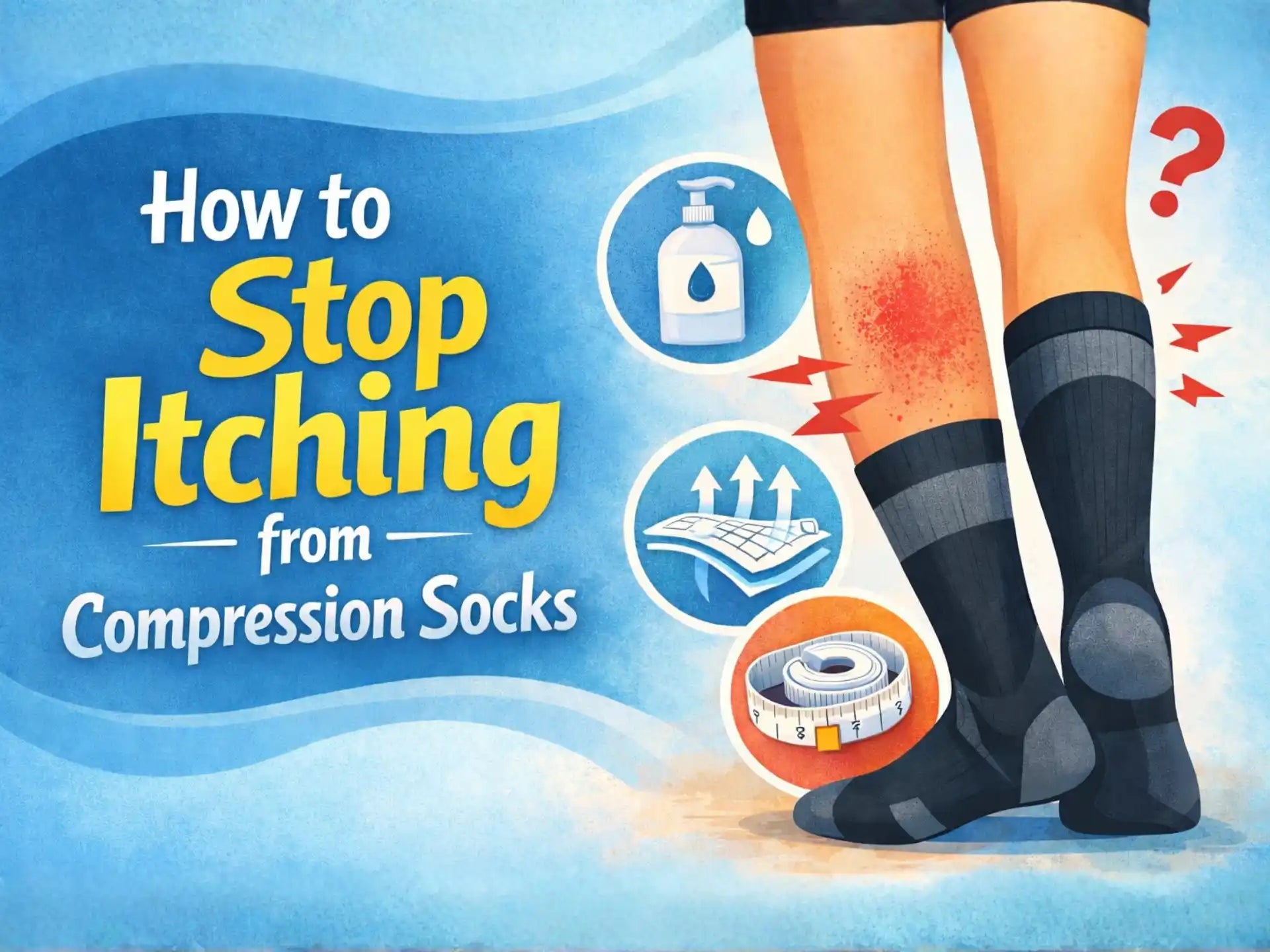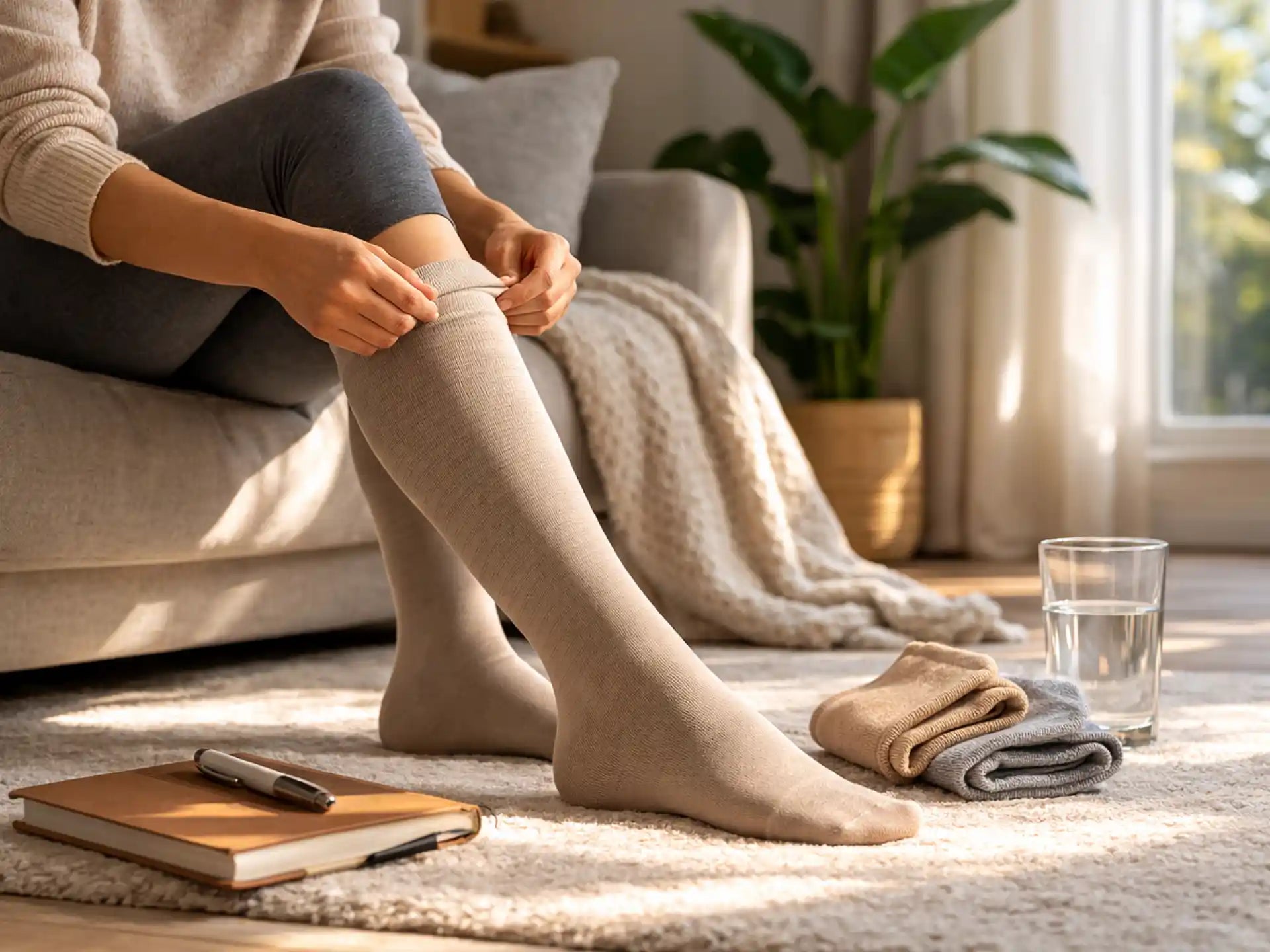

Compression socks used to be associated with long flights or medical recovery. Today, more people are wearing them as part of their everyday routine, which naturally leads to one question: Are compression socks good for everyday wear?
For many people, the answer is yes—compression socks can be worn every day when they feel comfortable and are properly sized. This is especially when choosing light compression socks (10–15 mmHg) designed for comfort rather than medical treatment. When worn correctly, they can blend seamlessly into daily life and help legs feel more supported throughout the day.
This article explains who everyday compression socks are for, how they should feel, and when you might not need them at all.
If you’re exploring compression socks and want a complete overview of how sizing, mmHg levels, fit, and daily use all connect, you can start with our Compression Socks Guide before diving deeper into this specific topic.
Can You Wear Compression Socks Every Day?
For most healthy adults, you can wear compression socks every day—as long as they provide light compression and fit properly.
Light compression socks apply gentle, graduated pressure: slightly snug around the ankle and gradually more relaxed up the leg. They’re made to support circulation without feeling tight or restrictive, which makes them suitable for long hours of wear.
Daily wear often makes sense if you:
- sit for long periods at a desk
- stand most of the day at work
- travel frequently
- experience mild leg fatigue or heaviness
If your socks feel comfortable and don’t leave deep marks, wearing them daily is usually fine.

Many people who wear compression socks throughout the day also wonder whether it’s comfortable to sleep in them. If that’s something you’ve thought about, we’ve covered it in more detail here.
What Does Light Compression (10–15 mmHg) Feel Like?
This is where most first-time wearers are unsure.
Light compression (10–15 mmHg) does not feel medical. It shouldn’t feel like strong pressure or squeezing. Instead, it feels:
- supportive at the ankle
- gently snug through the calf
- comfortable enough to forget you’re wearing them
That’s why light compression socks for everyday wear are often recommended for beginners—they’re easy to put on and realistic for all-day use.

Who Should Wear Light Compression Socks (10–15 mmHg)?
Light compression socks are designed for everyday comfort, not clinical treatment.
They’re a good option if you:
- work at a desk and sit most of the day
- stand for long shifts (retail, teaching, healthcare)
- notice tired or heavy legs by the evening
- want extra comfort while walking or commuting
- are new to compression socks and want something approachable
If your goal is daily comfort rather than strong medical support, light compression socks for daily wear are usually the best place to start.
Do Compression Socks Help With Tired or Heavy Legs?
For many people, compression socks help with tired or heavy legs, especially when fatigue comes from long sitting or standing.
Gentle compression around the lower leg can help reduce that sluggish, heavy feeling at the end of the day. While results vary from person to person, everyday compression socks are commonly chosen as a comfort-focused solution rather than a medical one.
They work best alongside movement—short walks, stretching, and changing positions throughout the day.
Are Compression Socks Safe for Daily Use?
For most people, compression socks are safe for daily use when they provide light compression and fit correctly.
You should speak with a healthcare professional before wearing compression socks every day if you have:
- circulation conditions
- nerve or sensation issues
- certain skin conditions
For general daily comfort, light compression socks (10–15 mmHg) are typically the safest and most wearable option.
Are Compression Socks Safe for Long-Term Daily Use?
This is one of the most common concerns people have when considering everyday compression: Is it safe to wear compression socks long term?
For most healthy adults using light compression (10–15 mmHg), long-term daily use is generally considered safe when the socks fit properly and feel comfortable. Light compression is designed to support circulation rather than restrict it. It should not cut off blood flow or cause dependency.
Some people worry that wearing compression socks regularly might make their legs “lazy” or weaken natural circulation. Current evidence does not support this concern. Graduated compression supports venous return while you are upright, but it does not replace your body’s natural circulation mechanisms.
That said, compression socks should always feel comfortable. If you notice numbness, tingling, unusual skin changes, or increasing discomfort, the compression level may be too strong or the size may not be appropriate.
Individuals with diagnosed vascular conditions should consult a healthcare professional before committing to long-term daily wear.
What Happens If You Wear Compression Socks All Day?
Wearing compression socks throughout the day is common, especially for people who sit or stand for extended periods. When the compression level is light and properly fitted, most people can comfortably wear them from morning until evening.
During daily wear, compression socks may:
- help reduce the sensation of leg heaviness
- provide steady support around the ankle
- feel more noticeable in the first few minutes, then gradually blend into the background
However, stronger compression levels (such as 20–30 mmHg and above) are typically intended for medical or supervised use. Wearing higher compression unnecessarily may feel restrictive and is not automatically more effective for everyday comfort.
If you are unsure which level is appropriate for your routine, reviewing the differences between compression strengths can help. See our full explanation here: Understanding Compression Levels (mmHg Guide).
When Should You Not Wear Compression Socks?
You may not need compression socks if:
- you’re already very active throughout the day
- you don’t experience leg discomfort or fatigue
- you prefer looser-fitting socks
Compression socks should never cause pain, numbness, or tingling. If they do, the size or compression level is likely wrong.
What’s the Difference Between Everyday Compression Socks and Higher Compression Levels?
More compression isn’t always better.
| Compression Level | Best Use |
|---|---|
|
Light compression (10–15 mmHg) |
Everyday wear, mild fatigue |
|
Moderate compression (15–20 mmHg) |
Stronger support, occasional use |
|
High compression (20–30+ mmHg) |
Medical or recovery use |
For daily life, light compression socks for everyday wear are often the most comfortable and practical choice.
How Should Everyday Compression Socks Feel?
A good pair of everyday compression socks should feel:
- snug, not tight
- supportive, not restrictive
- comfortable enough to wear all day
If you’re constantly adjusting them or eager to take them off, they’re probably not ideal for daily wear.
Final Take
For everyday comfort, light compression socks (10–15 mmHg) make sense for many people. When they fit well and feel easy to wear, they can quietly support your daily routine—without feeling medical or overdone.
Frequently Asked Questions
Are compression socks good for everyday wear?
Yes. Light compression socks are commonly worn for everyday comfort, especially during long periods of sitting or standing.
Can you wear compression socks every day?
Most healthy adults can wear light compression socks daily if they fit properly and feel comfortable.
Are compression socks safe for daily use?
For most people, light compression (10–15 mmHg) is considered safe for daily wear. Medical conditions may require professional guidance.
Do compression socks help with tired legs?
They may help reduce the feeling of tired or heavy legs, particularly after long sitting or standing.
When should you not wear compression socks?
If compression causes pain, numbness, or discomfort, or if advised otherwise by a healthcare professional.