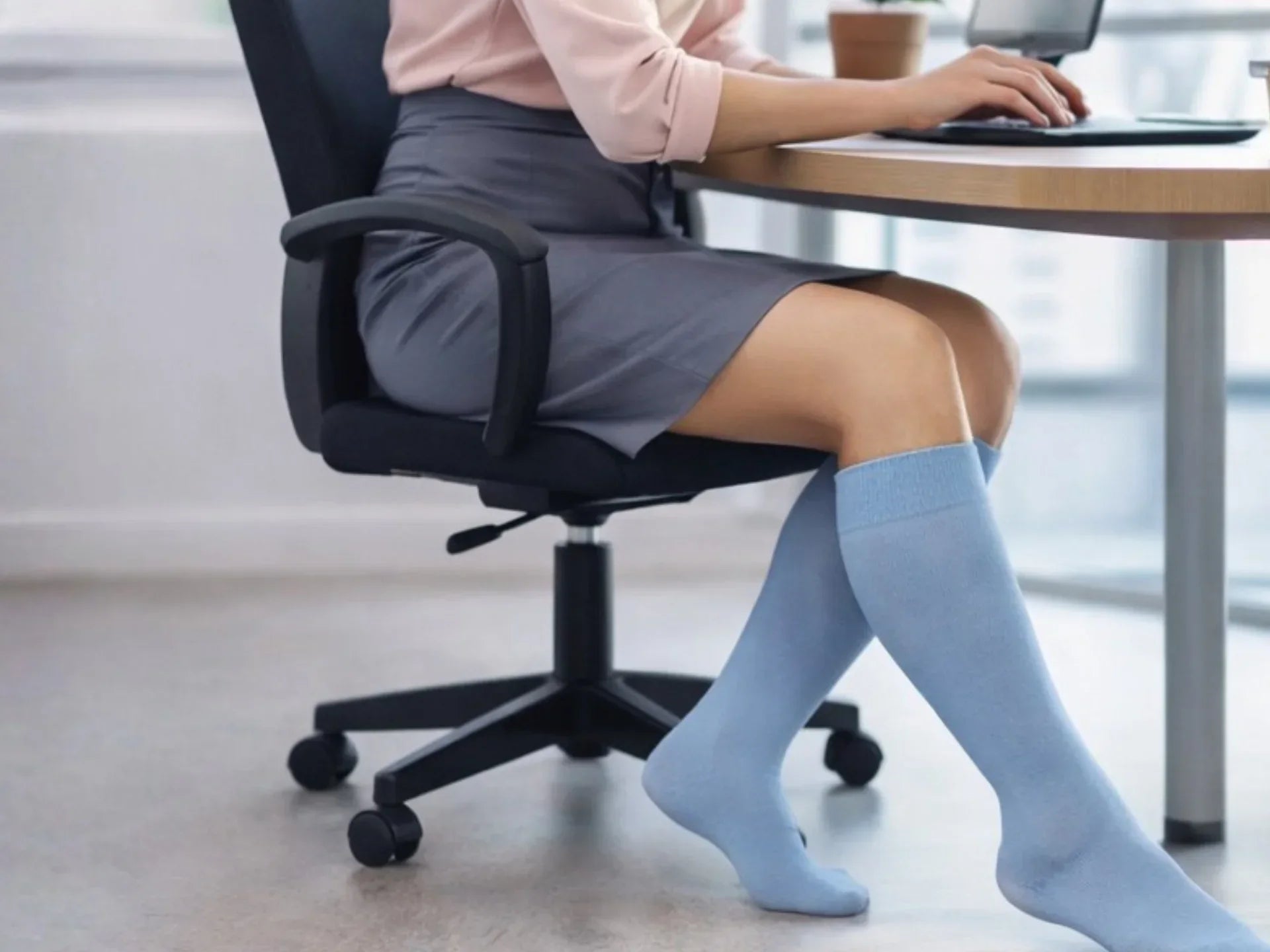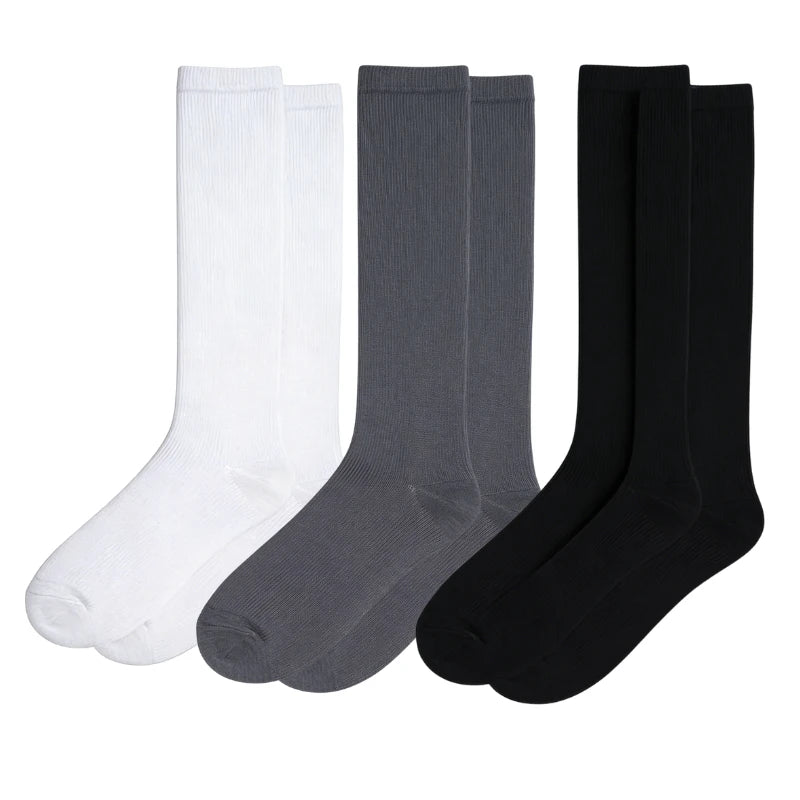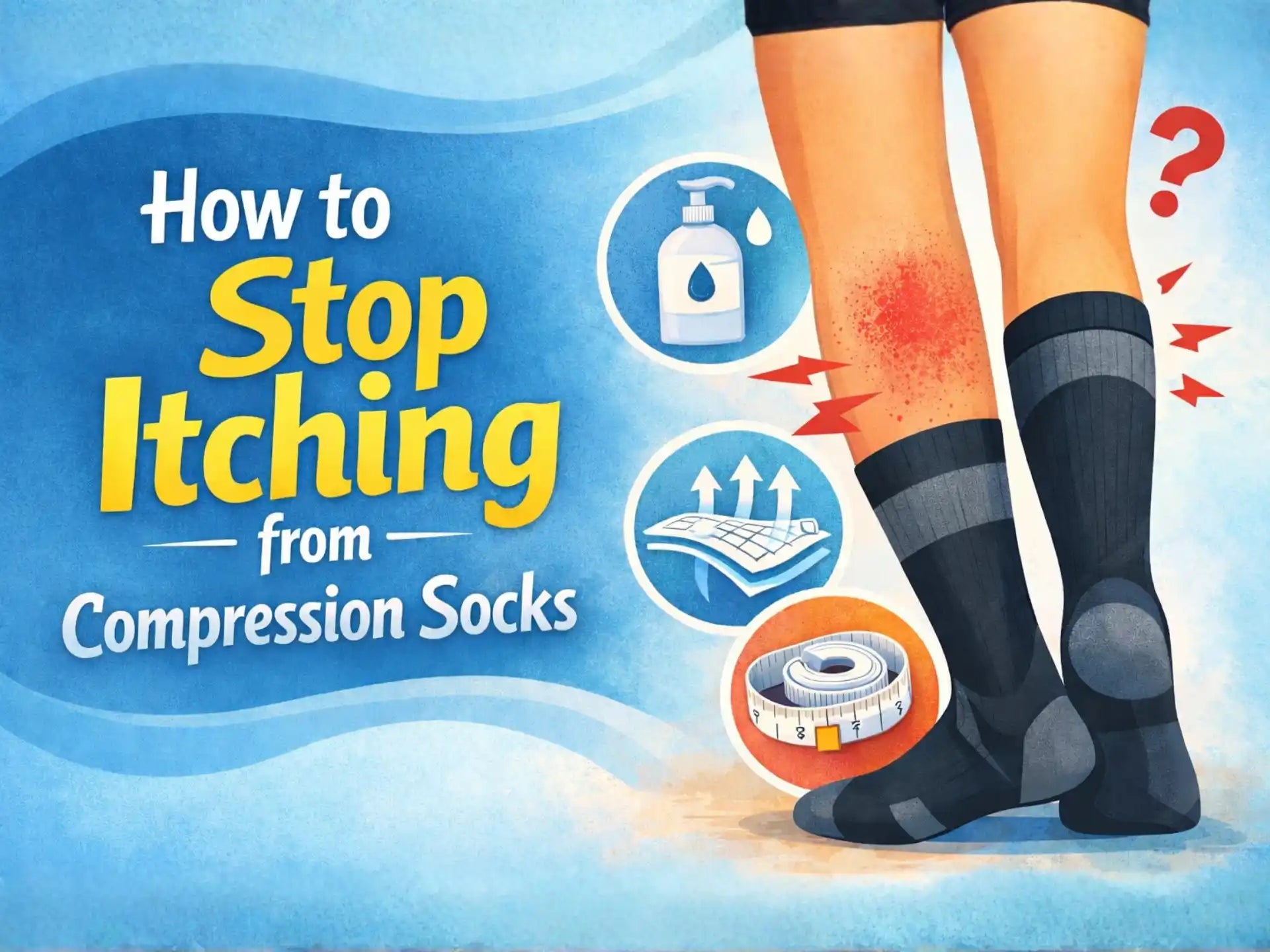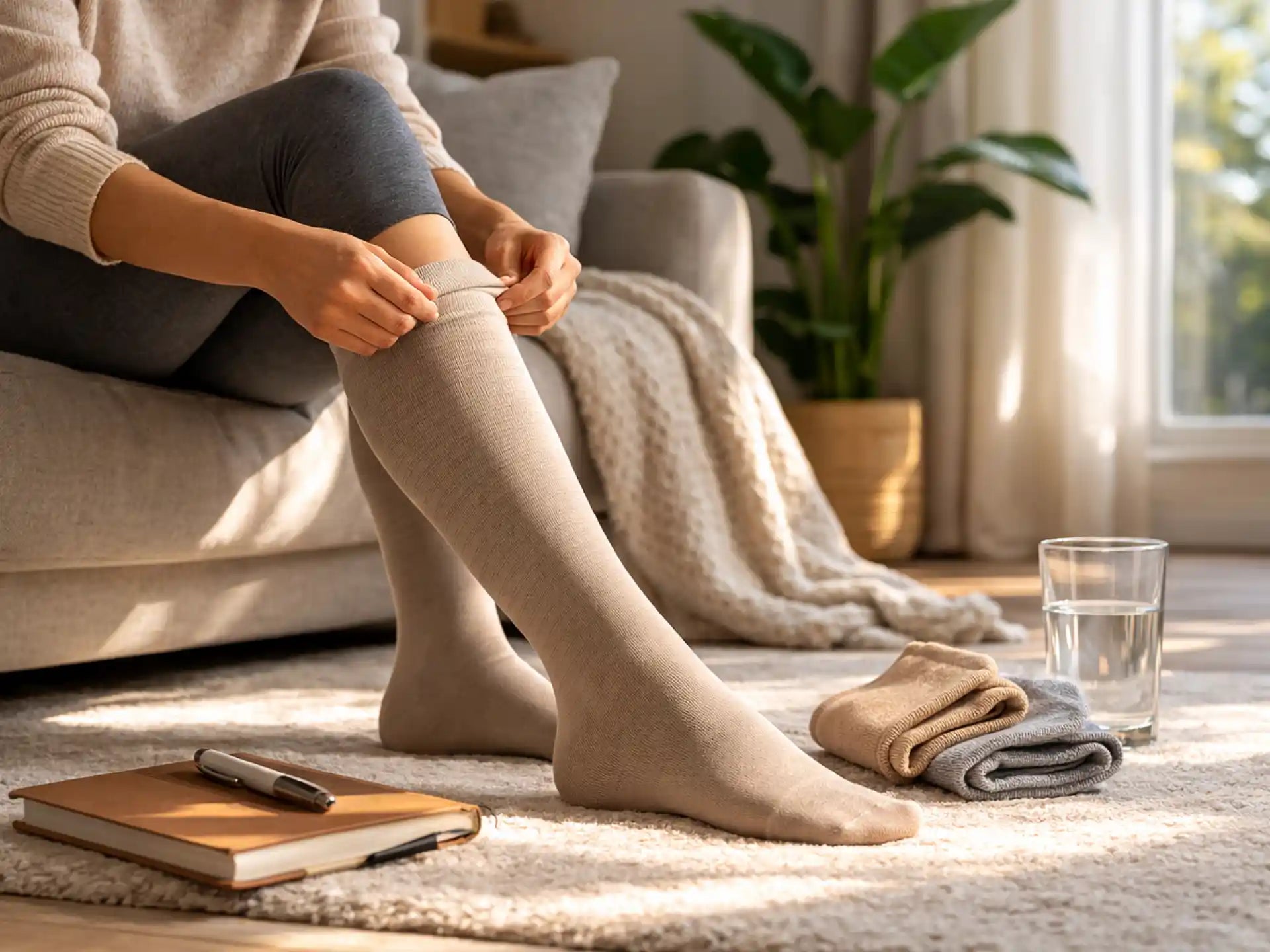

Many people searching for light compression ask whether 10–15 mmHg compression socks are truly suitable for everyday wear. If you work at a desk, commute daily, travel occasionally, or spend extended time sitting, you may not need firm compression. Instead, you may simply want comfortable support that does not feel restrictive.
This guide focuses specifically on how 10–15 mmHg compression socks perform during daily routines, what they feel like in real-world use, and when they make sense compared to higher compression levels. If you would like a full explanation of compression pressure terminology, you can review our overview of what mmHg means in compression socks first.
What Does 10–15 mmHg Feel Like in Daily Use?
10–15 mmHg is generally categorized as light compression. In practical terms, this means the socks provide a gentle, graduated pressure that is strongest at the ankle and gradually decreases up the calf. The pressure is noticeable but typically does not feel tight or restrictive.
For most healthy adults, light compression feels supportive rather than firm. You may notice a subtle hug around the ankle, but after several minutes of wear, many users report that they no longer actively feel the pressure.
When 10–15 mmHg Makes Sense for Everyday Wear
Light compression is commonly chosen for the following routines:
| Daily Routine | Why 10–15 mmHg Works |
|---|---|
| Desk work | Provides mild support without excessive tightness |
| Commuting | Comfortable during prolonged sitting |
| Remote work | Light structure during low activity |
| Short travel | Balanced support without heavy pressure |
| First-time compression users | Easier transition into compression wear |
Can You Wear 10–15 mmHg Compression Socks All Day?
One of the most common search questions is whether you can wear compression socks all day. Light compression is generally more comfortable for extended wear compared to moderate or firm compression levels.
According to the Cleveland Clinic, compression therapy supports circulation when appropriately matched to the individual’s needs. For healthy adults wearing compression for comfort during daily activity, lighter ranges often feel easier to tolerate for longer periods.
However, comfort always depends on proper sizing. Even light compression can feel restrictive if calf measurements are incorrect. You can review our guide on how to measure for compression socks to ensure accurate fit.
How 10–15 mmHg Compares to Higher Compression Levels
| Compression Level | Pressure Intensity | Typical Use Context |
|---|---|---|
| 10–15 mmHg | Light | Everyday comfort |
| 15–20 mmHg | Moderate | Extended standing or travel |
| 20–30 mmHg | Firm | Structured support contexts |
If you are deciding between light and moderate compression, our comparison guide on 10–15 mmHg vs 15–20 mmHg compression socks explains how the pressure difference feels in daily use.
Is 10–15 mmHg Enough for Standing All Day?
If your job involves prolonged standing, such as retail, hospitality, or teaching, light compression may feel comfortable but not highly structured. Some individuals prefer 15–20 mmHg in those scenarios because it provides firmer ankle pressure.
If your standing periods are moderate rather than continuous, 10–15 mmHg may still be sufficient. The difference largely comes down to how much structured support you prefer.
How to Tell If 10–15 mmHg Is Right for You
Light compression such as 10–15 mmHg is often a practical starting point for individuals who are new to compression socks. Because the pressure level is gentle, it allows the body to adapt gradually without feeling restrictive or overly tight during the first few hours of wear.
This range is commonly preferred by people whose daily routines involve extended sitting, desk work, commuting, or moderate movement rather than continuous standing. In these situations, subtle support around the ankle and lower calf is usually sufficient for everyday comfort.
Individuals who prioritize comfort over firmness may also find 10–15 mmHg more suitable than moderate compression. The goal in these cases is not maximum pressure, but balanced, wearable support that feels natural throughout the day.
If you are still uncertain whether light compression aligns with your activity level and comfort preference, you can review our broader decision guide on what mmHg compression socks do I need, which walks through how to match compression strength to different routines.
Are 10–15 mmHg Compression Socks Safe for Daily Wear?
For most healthy adults, light compression is commonly worn for daily comfort. However, individuals with specific medical concerns should consult a healthcare professional before choosing any compression level.
If you have concerns about whether compression socks are appropriate for your situation, you may want to read our article on who should not wear compression socks for additional context.
Final Thoughts
10–15 mmHg compression socks are widely chosen for everyday wear because they provide gentle support without excessive tightness. They are often suitable for desk work, commuting, and light activity routines.
For individuals seeking comfortable, all-day wear rather than firm structural compression, light compression is frequently the most practical starting point.
How 10–15 mmHg Fits Into the Bigger Compression Picture
While 10–15 mmHg compression socks are commonly chosen for everyday comfort, they are only one part of the broader compression spectrum. Understanding how light compression compares to moderate and firm ranges can help you make more confident decisions over time.
If you want a complete overview of how compression levels, sizing, fit, daily wear, and activity types connect together, you can explore our full Compression Socks Guide. That page brings together everything from mmHg definitions to choosing the right compression strength for different routines.
Frequently Asked Questions
Are 10–15 mmHg compression socks good for everyday wear?
Many people choose 10–15 mmHg for daily comfort, especially during desk work or light activity.
Can I wear 10–15 mmHg compression socks all day?
Light compression is generally more comfortable for extended daily wear than moderate or firm ranges, provided the sizing is correct.
Is 10–15 mmHg enough for travel?
For shorter flights or routine travel, 10–15 mmHg may provide balanced support. Longer trips may lead some individuals to prefer moderate compression.
Do 10–15 mmHg compression socks feel tight?
They typically feel snug but not restrictive when properly sized.
Should beginners start with 10–15 mmHg?
Many first-time compression users begin with light compression before considering stronger pressure ranges.