
If you’ve searched what mmHg compression socks do I need, you’re likely trying to decide between options such as 10–15 mmHg, 15–20 mmHg, or even 20–30 mmHg. The numbers look simple, but choosing the wrong compression level can make socks feel either too loose to be useful or too tight to wear comfortably for long periods.
This guide focuses entirely on helping you determine which compression range fits your routine, comfort preference, and daily movement. If you would like a full explanation of what mmHg means as a pressure unit, you can review our detailed breakdown of what mmHg means in compression socks first.
Step 1: Start With How You Spend Your Day
The most reliable way to answer what mmHg compression socks you need is to evaluate your daily activity pattern. Compression should match your routine rather than simply selecting the highest pressure available.
If you spend most of your day sitting at a desk, commuting, or working on a computer, lighter compression often feels sufficient. If you stand for extended shifts, walk continuously, or remain on your feet for long hours, moderate compression may feel more structured. If your usage is more specialized, such as extended travel or recovery-focused wear, firmer ranges may be considered.
Common Activity Scenarios and Recommended Compression Ranges
| Daily Scenario | Typical Compression Range | Comfort Expectation |
|---|---|---|
| Desk work / long sitting | 10–15 mmHg | Light, easy all-day wear |
| Retail / teaching / nursing shifts | 15–20 mmHg | Noticeably firmer support |
| Long flights or road travel | 10–20 mmHg | Balanced comfort and structure |
| Structured or recovery-focused use | 20–30 mmHg | Strong pressure feel |

Step 2: Consider How You Want Compression to Feel
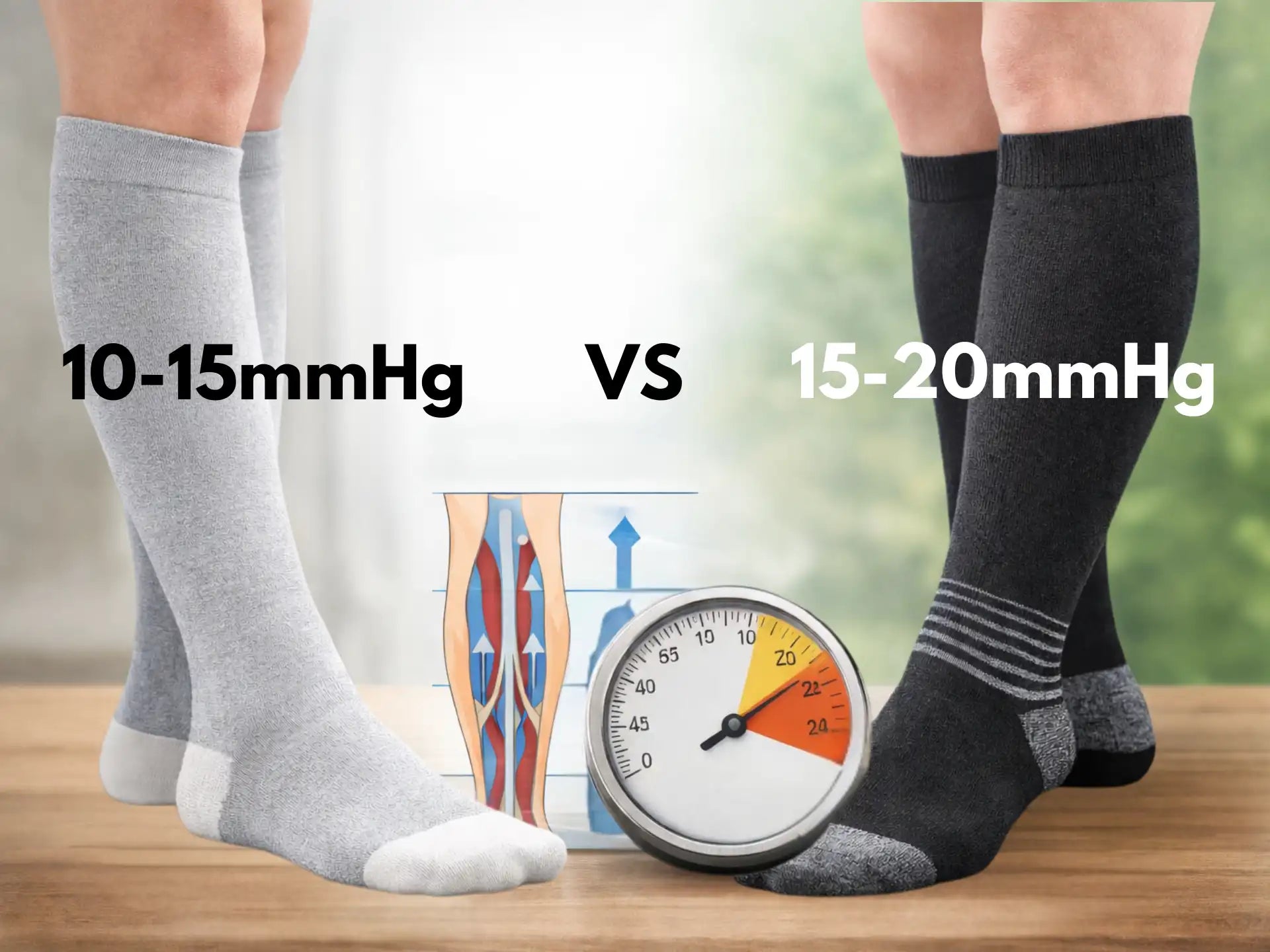
Compression socks are not meant to feel painful. Light compression such as 10–15 mmHg typically feels snug but easy to forget once worn. Moderate compression like 15–20 mmHg feels more structured and slightly tighter around the ankle and lower calf.
If you are unsure, starting with lighter compression is often the most practical approach. Many first-time buyers begin with 10–15 mmHg and only move to 15–20 mmHg if they prefer a firmer sensation.
If you are deciding specifically between these two ranges, our side-by-side guide on 10–15 mmHg vs 15–20 mmHg compression socks explains the differences in greater detail.
Step 3: Factor in Fit Before Increasing Compression
Improper sizing can make any compression level feel tighter than intended. Before increasing mmHg strength, confirm that your calf circumference and foot length match the size chart.
You can follow our measurement guide on how to measure for compression socks to ensure accurate fit.
Light vs Moderate vs Firm: How They Compare in Real Use
| Compression Level | Best For | How It Feels |
|---|---|---|
| 10–15 mmHg | Everyday comfort | Gentle support, minimal pressure sensation |
| 15–20 mmHg | Long standing or travel | Noticeably firmer ankle pressure |
| 20–30 mmHg | Structured support contexts | Strong compression feel |
Is Higher mmHg Always Better?
No. Higher mmHg means stronger pressure, but stronger does not automatically mean more appropriate. The goal is balanced support for your specific routine.
According to the Cleveland Clinic, compression therapy works best when the pressure range matches the intended use. Excess pressure without clear need may feel restrictive rather than beneficial.
A Simple Decision Framework
If you want a simplified way to decide what mmHg compression socks you need, consider the following sequence:
First, evaluate how long you are on your feet each day. Second, consider how sensitive you are to tight clothing. Third, confirm proper sizing. If most of your day involves moderate activity and you prefer comfort over pressure, 10–15 mmHg is often appropriate. If your work involves prolonged standing and you prefer firmer structure, 15–20 mmHg may feel better suited.
Final Take
The answer to what mmHg compression socks do I need depends on activity level, comfort preference, and proper fit. Most beginners start with lighter compression and adjust only if they prefer stronger pressure.
If you would like a broader overview of how compression level, sizing, and wear patterns connect, you can explore our Compression Socks Guide for a full breakdown.
Frequently Asked Questions
What mmHg compression socks do I need for everyday wear?
For general daily comfort and desk-based routines, many people begin with 10–15 mmHg.
Is 15–20 mmHg too strong for beginners?
Some beginners prefer starting with lighter compression before moving to moderate ranges, especially if they are sensitive to tight garments.
Can I wear 20–30 mmHg compression socks daily?
Some individuals can, but higher compression feels firmer and may not be necessary for routine everyday wear.
Does sizing affect how compression feels?
Yes. Incorrect sizing can significantly change how compression feels, even at lighter pressure levels.
Should I start with lower mmHg first?
Many first-time buyers start with lighter compression to assess comfort before increasing pressure strength.