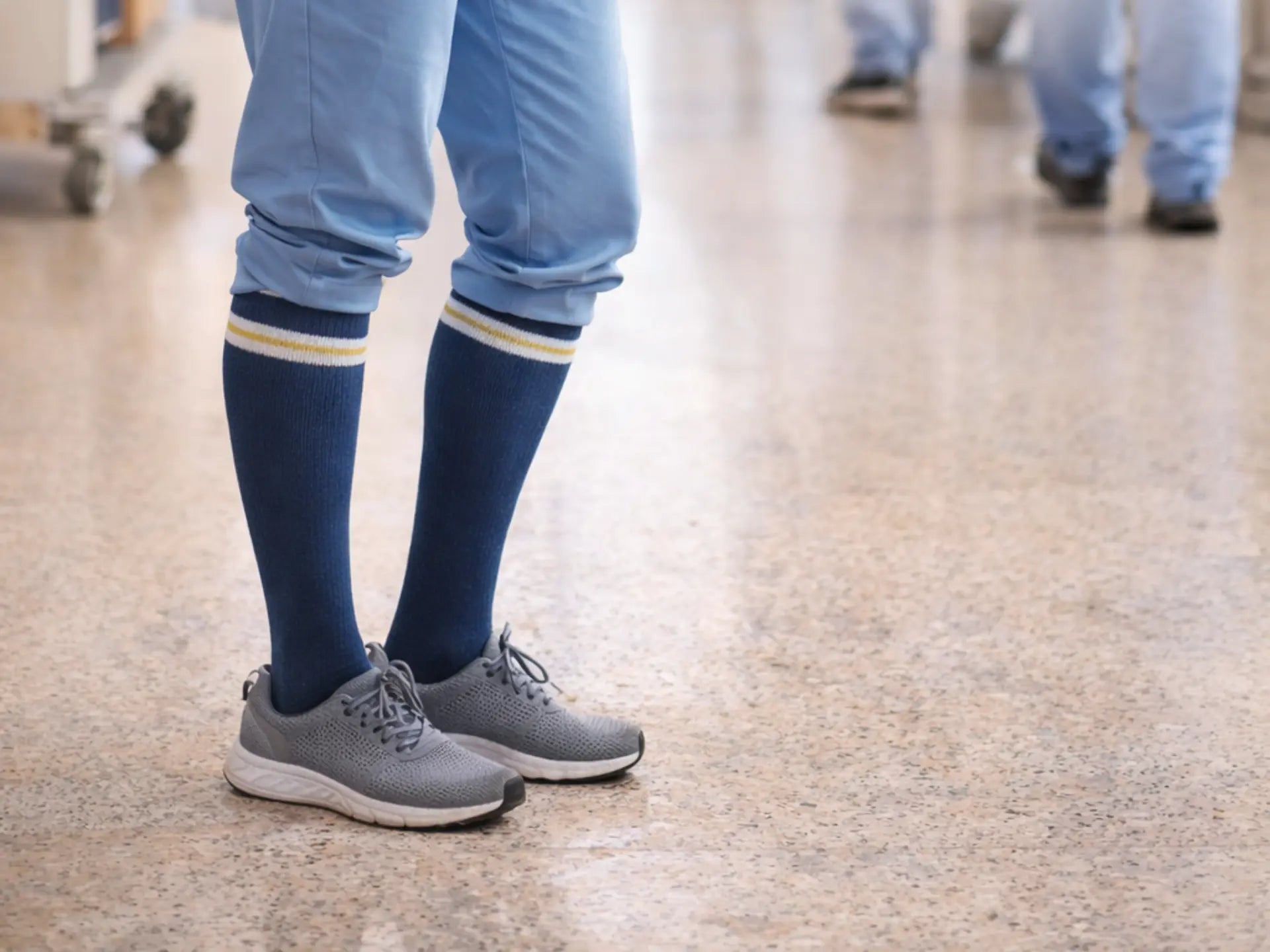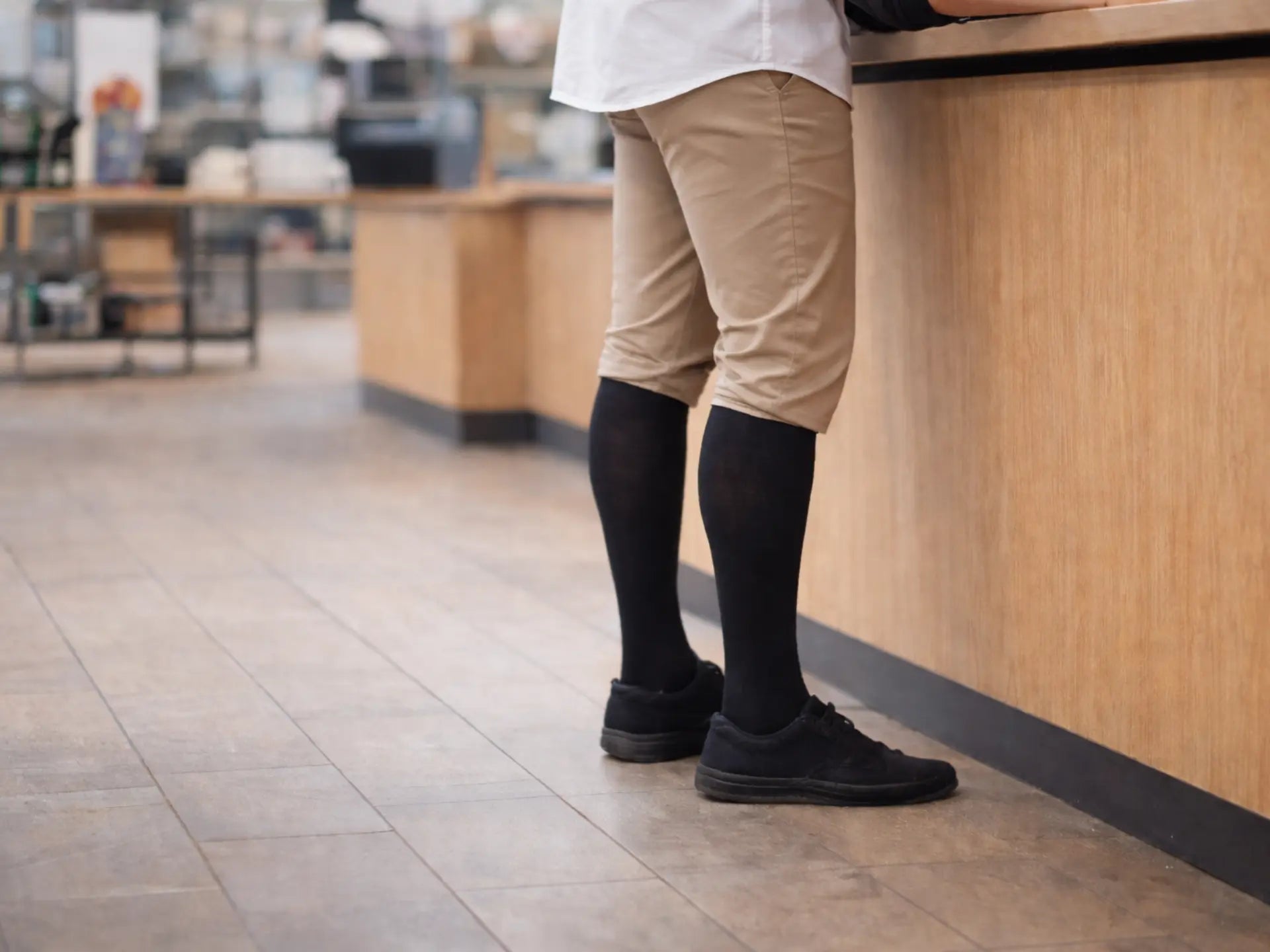

Retail shifts look simple from the outside, but they’re physically demanding on your legs.
You’re at checkout for an hour. Then walking the floor. Then lifting and stocking. Then back to standing again. There’s rarely a true break from being upright.
Short answer: yes — for retail workers who stand for 6–8 hours or more, light compression socks can help reduce leg heaviness and mild swelling caused by prolonged standing. Most healthy adults do well with 10–15 mmHg for daily shifts.
By the time the store closes, your feet feel heavy, your calves feel tight, and sitting down feels like an event. That’s usually when people start searching for compression socks for retail workers.
Why Retail Jobs Wear Your Legs Out
Retail work isn’t just standing. It’s long hours of static standing mixed with short bursts of walking, bending, and lifting. That pattern increases lower-leg fatigue over time.
According to resources like the National Institute for Occupational Safety and Health (NIOSH), prolonged standing can contribute to discomfort, swelling, and lower limb fatigue in workplace settings.
You don’t need a medical condition to feel that end-of-shift ache. You just need a long Saturday shift.
What Compression Socks Actually Do During a Retail Shift
Compression socks use graduated pressure, meaning they apply slightly more pressure at the ankle and gradually less toward the calf.
In practical terms, this design helps your lower legs feel more supported during long periods on your feet. It’s not dramatic. You won’t feel “boosted.” But many people notice less heaviness by the end of the day.
For most healthy retail workers, light compression in the 10–15 mmHg range is usually enough for daily wear.
If you're unsure what that number means, you can read this breakdown of what mmHg means in compression socks and how compression levels differ.
If you want a broader overview beyond retail work — including sizing guidance, how long to wear them, and when to choose moderate compression — our Compression Socks Guide explains everything in one place.
What Retail Workers Usually Notice
The biggest difference isn’t during hour two. It’s during hour eight.
Instead of deep calf tightness when walking to your car, your legs feel more stable. Instead of immediate ankle puffiness after removing your shoes, the sensation feels lighter.
Compression socks aren’t magic. They simply reduce the cumulative stress of being upright all day.
How Much Compression Is Right for Retail Work?
| Shift Type | Time Standing | Suggested Compression | Purpose |
|---|---|---|---|
| 4–6 hour shift | Moderate | 10–15 mmHg | Light fatigue support |
| 8-hour shift | Extended standing | 15–20 mmHg | Stronger end-of-day support |
| Holiday season / peak retail | High movement + long hours | 15–20 mmHg | Structured all-day stability |
Most people do well starting at the lower end. You can always increase compression later if needed.
How Compression Socks Should Feel During Work
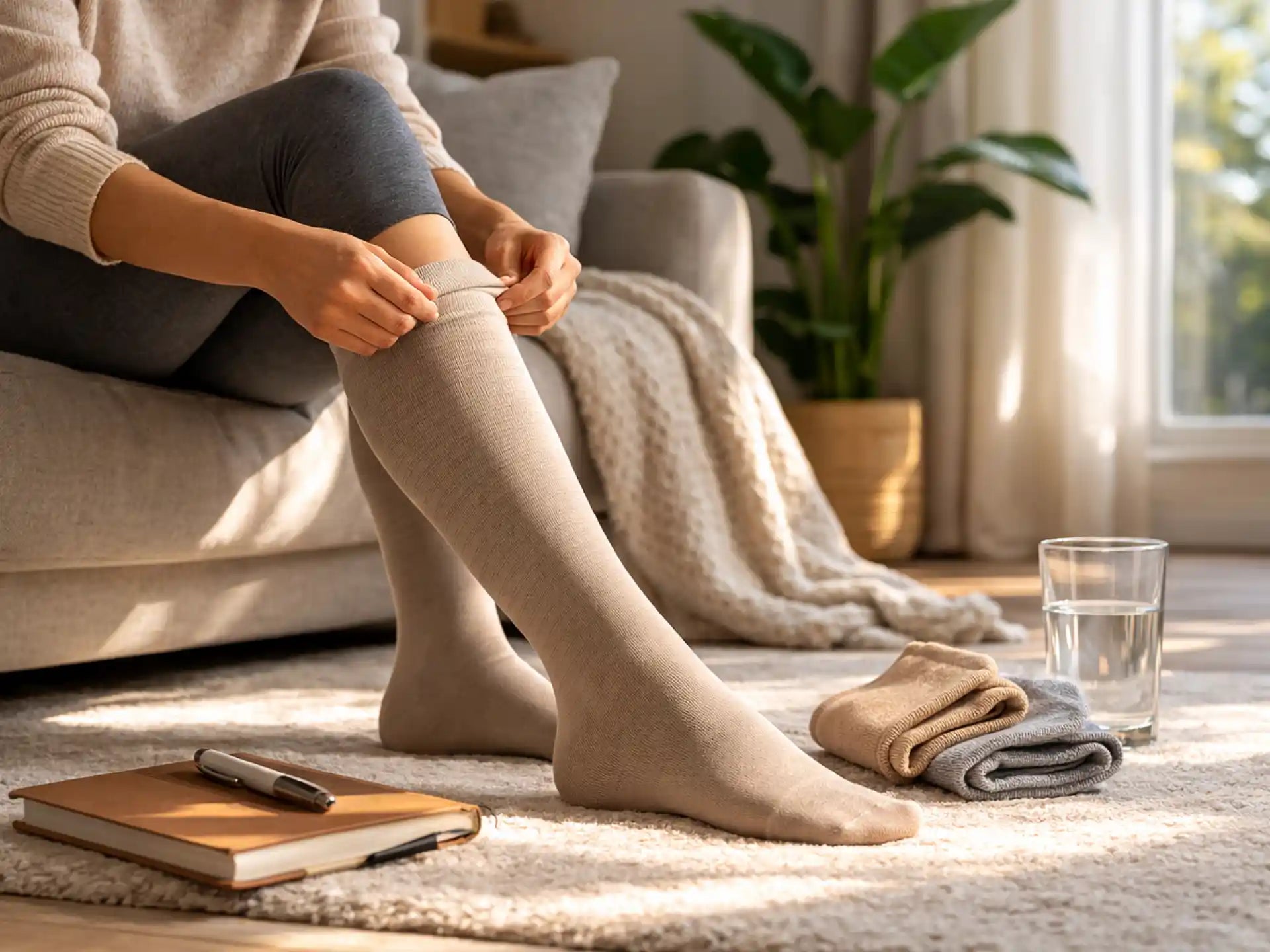
They should feel firm at the ankle, flexible through the calf, and stable in your shoe.
You should be able to bend, crouch, and move inventory without feeling restricted.
If your toes feel numb, if the top band digs into your skin, or if you’re rolling them down halfway through your shift, they’re too tight or poorly sized.
When Retail Workers Probably Don’t Need Them
If your shifts are short, you alternate sitting frequently, or your legs rarely feel fatigued, compression socks may not add much.
They’re a support tool, not a requirement.
What to Look for in Compression Socks for Retail
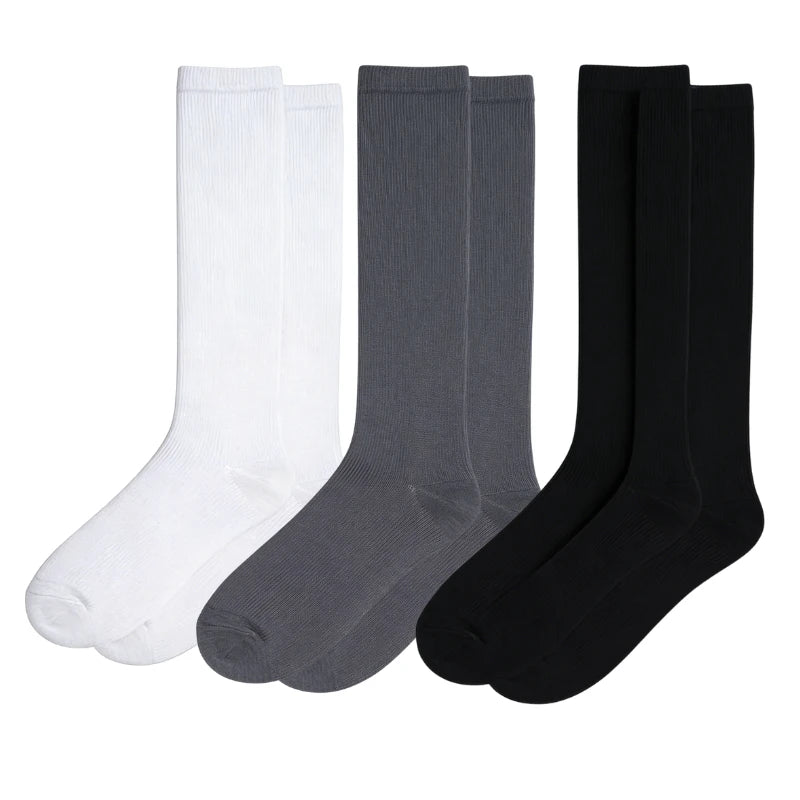
Retail workers typically prioritize comfort over medical-grade strength. The best pairs for long shifts use light graduated compression, breathable fabric for warm store environments, and a secure fit that stays in place under work pants without digging into the calf.
If you're exploring options designed specifically for long workdays, you can browse our light compression socks for extended wear.
Final Thoughts
Retail work is physical whether people admit it or not.
If your legs feel heavy by closing time, compression socks can help take the edge off long shifts.
If your legs already feel fine, you probably don’t need them.
It’s less about the trend and more about how your body feels after hour eight.
Frequently Asked Questions
Are compression socks good for retail workers?
Many retail workers find that light compression reduces leg fatigue during long standing shifts.
Do retail workers need compression socks?
No, they are not required. They’re optional support based on comfort and shift length.
What compression level is best for retail jobs?
Most healthy adults prefer 10–15 mmHg for everyday retail work.
Can you wear compression socks for an entire shift?
Yes, properly fitted light compression socks are designed for all-day wear.
Do compression socks help with swollen ankles after work?
They may help reduce the sensation of heaviness and mild swelling caused by prolonged standing.