
If you’ve ever worked a hospital shift, you already know this: it’s not the stress that hits first. It’s your legs.
By hour six, your feet feel heavier. By hour ten, your calves feel tight. By the end of a 12-hour shift, taking your shoes off feels like a reward.
That’s why compression socks for nurses became common in hospitals, clinics, and long-term care facilities. Not because they’re trendy — because long clinical shifts are physically demanding on your lower legs.
Why Nursing Shifts Build Leg Fatigue So Quickly
Nursing isn’t static. It’s constant micro-movement.
You walk between rooms. Pivot at bedsides. Lift and reposition patients. Stand charting. Rush during emergencies. Then stand again during handoff. It’s a combination of motion and stillness that quietly loads your calves for hours.
Health resources often explain that prolonged standing can increase pressure in leg veins, which may contribute to heaviness or swelling sensations over time. For example, the Mayo Clinic discusses how extended upright time can affect leg comfort.
You don’t need a medical diagnosis to notice the feeling. You just need back-to-back shifts.

What Compression Socks Actually Do During a Shift
Compression socks use graduated pressure — slightly firmer at the ankle, gradually lighter toward the calf. That structure helps create a supported feeling during long periods on your feet.
The goal for nurses isn’t intense squeeze. It’s consistency. A subtle, steady support that prevents the “progressively worse” feeling as the hours stack up.
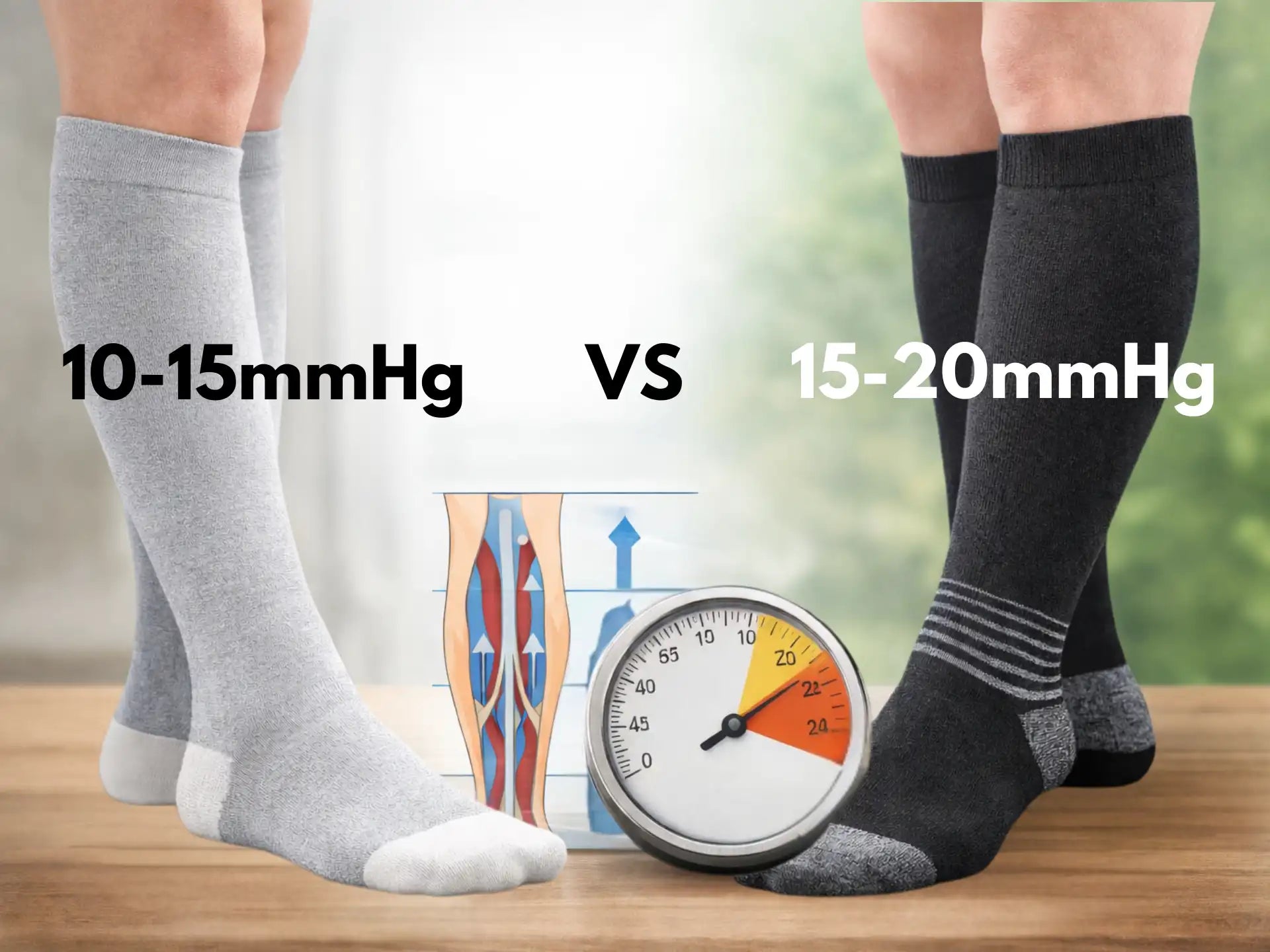
For many healthy nurses, 10–15 mmHg light compression is enough for daily shifts. It feels structured when you first put them on, then fades into the background as you move.
If you're unsure what those numbers represent, here’s a clear explanation of what mmHg means in compression socks and how different pressure levels compare.
For a broader overview — including sizing, wear time, and how to choose between light and moderate compression — our Compression Socks Guide covers everything in one place.
What Nurses Commonly Notice
The biggest difference usually shows up after the shift — not during it.
Instead of that deep calf tightness walking to your car, your legs feel steadier. Instead of immediate ankle puffiness after removing your shoes, the sensation feels lighter.
Compression socks aren’t dramatic. They reduce cumulative fatigue.
How Much Compression Do Nurses Really Need?
| Shift Type | Demand Level | Suggested Compression | Reason |
|---|---|---|---|
| 8-hour shift | Moderate | 10–15 mmHg | Daily comfort support |
| 12-hour shift | Extended standing | 10–20 mmHg | Reduce end-of-shift heaviness |
| Double shift | High cumulative load | 15–20 mmHg | Extra structured support |
Most nurses start light. Stronger isn’t automatically better. Proper fit matters more than raw pressure.
How They Should Feel Under Scrubs
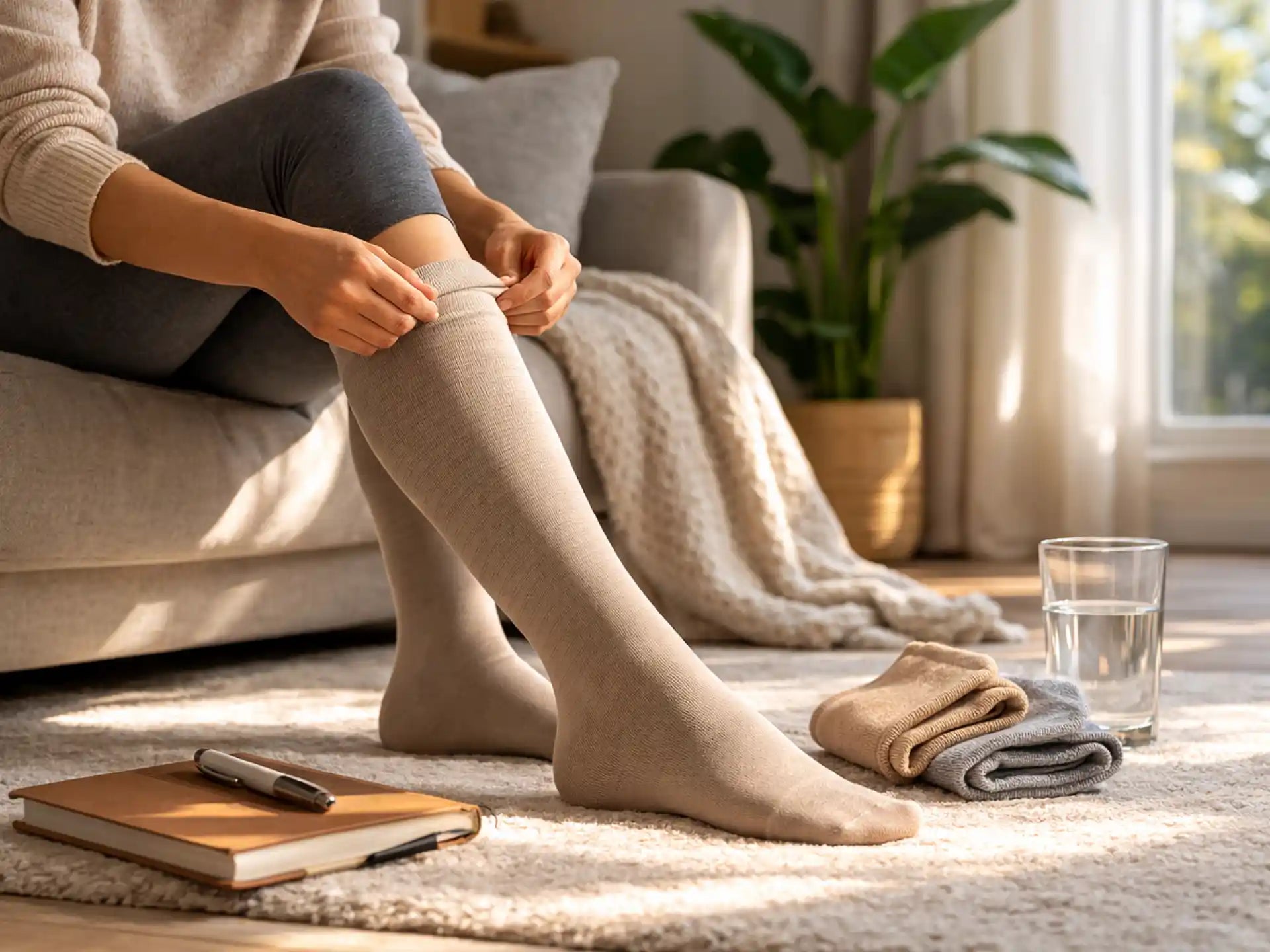
Compression socks should feel firm at the ankle and flexible through the calf. They shouldn’t dig into the back of your knee when sitting. They shouldn’t slide down mid-shift.
You should be able to squat, kneel, and move quickly without restriction. If your toes feel numb or you constantly adjust them under your scrubs, sizing may be off.
Night Shifts vs Day Shifts
Night shifts often feel harder on the body overall due to sleep disruption. Some nurses report that leg fatigue feels more pronounced during back-to-back night rotations.
Light compression can provide a steady baseline support regardless of schedule. It won’t fix sleep cycles, but it may help your legs feel less drained by sunrise.
Common Mistakes Nurses Make With Compression Socks
One mistake is choosing compression that’s too strong “just in case.” Overly firm socks can feel restrictive during long movement-heavy shifts.
Another mistake is poor sizing. Measuring your calf and ankle circumference matters more than guessing based on shoe size alone.
Finally, wearing worn-out socks for months reduces effectiveness. Elastic fibers lose structure over time.
How Many Pairs Do Nurses Actually Need?
If you work full-time shifts, rotating at least 3–5 pairs helps maintain elasticity and hygiene. Washing after each shift preserves fabric and prevents loss of graduated structure.
When You Probably Don’t Need Them
If you rotate between sitting and standing frequently and rarely feel leg heaviness or swelling after work, compression may not add much.
They’re support equipment — not mandatory medical gear.
What to Look for in Compression Socks for Nurses
Most nurses prioritize breathability and durability. Look for moisture-wicking fabric that stays comfortable during long hours, especially under warm hospital lighting.
A cuff that stays up without digging in is essential under scrubs. Flexible stretch matters for bending and kneeling. Neutral colors often work best with uniform policies.
If you’re exploring options designed specifically for long clinical shifts, you can browse our light compression socks for extended wear built for all-day support.
Final Thoughts
Nursing is physically demanding. Your legs absorb more load than you realize until the shift ends.
Compression socks for nurses aren’t about medical intervention. They’re about finishing long shifts feeling less drained.
If your legs feel fine, you probably don’t need them. If your legs feel heavy by hour eight, they’re worth trying.
Frequently Asked Questions
Why do nurses wear compression socks?
Many nurses wear them to reduce leg fatigue and mild swelling sensations during long standing shifts.
Can nurses wear compression socks every shift?
Yes, properly fitted light compression socks are designed for extended daily wear.
Are compression socks safe for 12-hour shifts?
For healthy adults using light compression, they are commonly worn for 8–12 hours comfortably.
Is 20–30 mmHg necessary for nurses?
Not usually. Most healthy nurses prefer 10–15 mmHg for everyday use unless advised otherwise by a healthcare professional.
How long should nurses wear compression socks?
Most wear them during the full shift and remove them afterward. Light compression is generally comfortable for 8–12 hours.