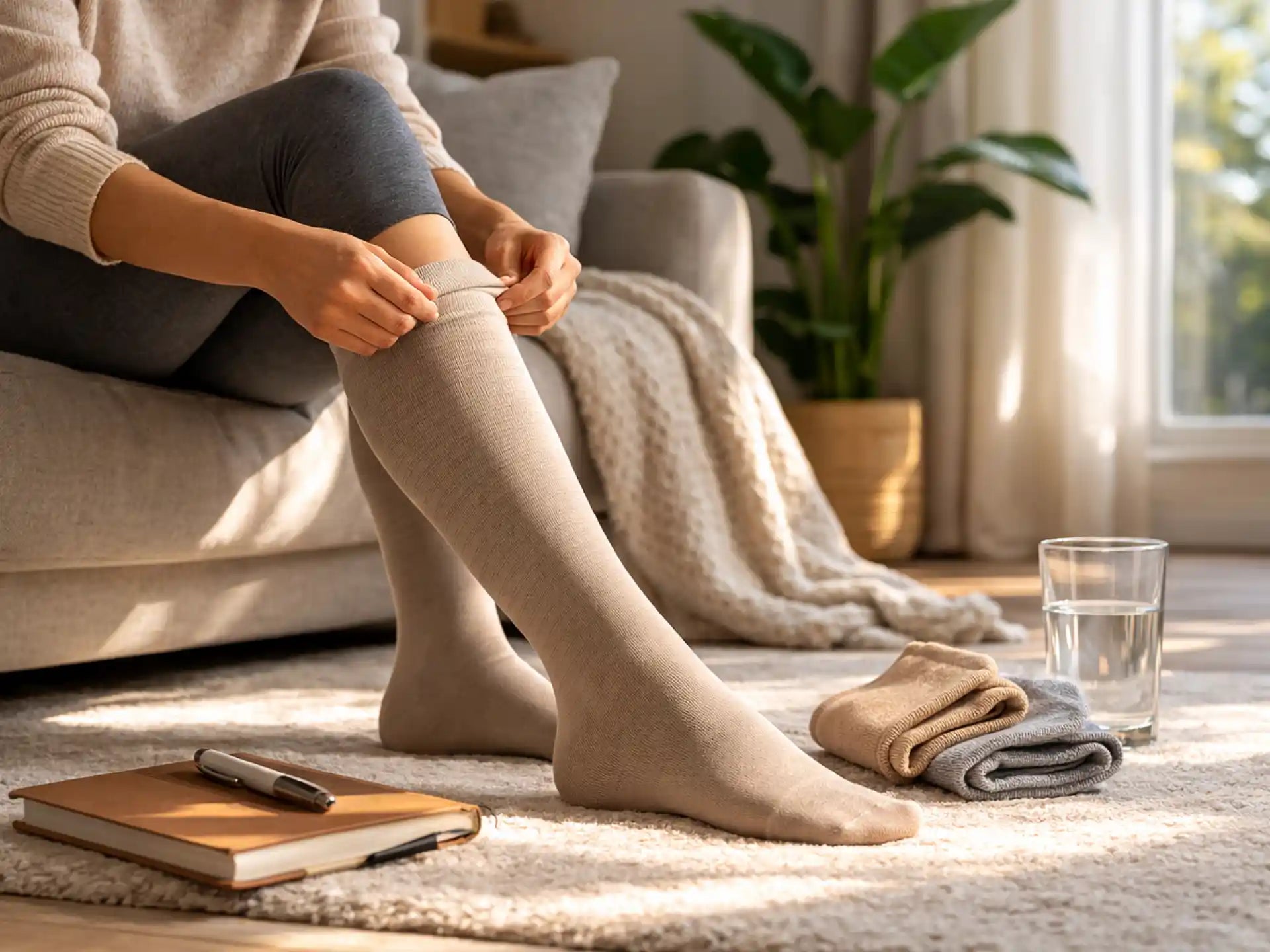

Compression socks are no longer limited to flights or recovery days. Many people now wear them as part of everyday life—during work, commuting, walking, or long hours on their feet. As compression socks become more common, one question comes up again and again: how long should you wear compression socks in a day?
For everyday comfort, most people don’t need to wear compression socks all day. That answer often surprises people, especially if you’re new to compression. It’s easy to assume “more is better,” but everyday compression doesn’t work that way. The right wear time depends less on a fixed number of hours and more on how your legs feel throughout the day.
If you’re exploring compression socks and want a complete overview of how sizing, mmHg levels, fit, and daily use all connect, you can start with our Compression Socks Guide before diving deeper into this specific topic.
What “wearing compression socks in a day” usually looks like
In daily life, most people don’t put on compression socks with a strict plan. They put them on in the morning before work, during travel days, or when they expect long periods of sitting or standing. Over time, they start to notice patterns—when their legs feel better with compression and when it no longer adds anything.
For light compression socks designed for everyday wear, wearing them for several hours at a time is very common. Many people keep them on through the most demanding part of the day and take them off once they’re home and moving less. The key point is that everyday compression is meant to support activity, not replace rest.

How your daily routine affects wear time
How long you wear compression socks in a day should match how your day unfolds. If you spend long hours sitting at a desk, standing at work, or commuting, compression often feels most helpful during those stretches. Once your activity level changes—when you’re resting, lying down, or no longer putting stress on your legs—the benefit often fades.
This is why some people wear compression socks for four to six hours, while others keep them on longer during particularly busy days. There isn’t one universal number that fits everyone, and that flexibility is exactly what makes light compression practical for everyday routines.
When it makes sense to take compression socks off
Compression socks should feel supportive, not noticeable. If you start to feel pressure building, warmth, tightness, or a sense of relief the moment you take them off, that’s usually your signal that they’ve done their job for the day.
Taking compression socks off in the evening is common, especially once you’re relaxing or preparing for bed. At that point, your legs are no longer working against gravity in the same way, and compression may no longer add comfort. Listening to these small cues matters more than trying to hit a specific number of hours.
Can you wear compression socks all day?
Some people do wear light compression socks most of the day without discomfort, particularly during travel days or long shifts. That can be perfectly fine if the socks remain comfortable and don’t cause pressure or irritation.
However, wearing compression socks all day is not required for everyday comfort. If your legs feel fine without them later in the day, removing them is a reasonable choice—not a mistake.

Does compression level change how long you should wear them?
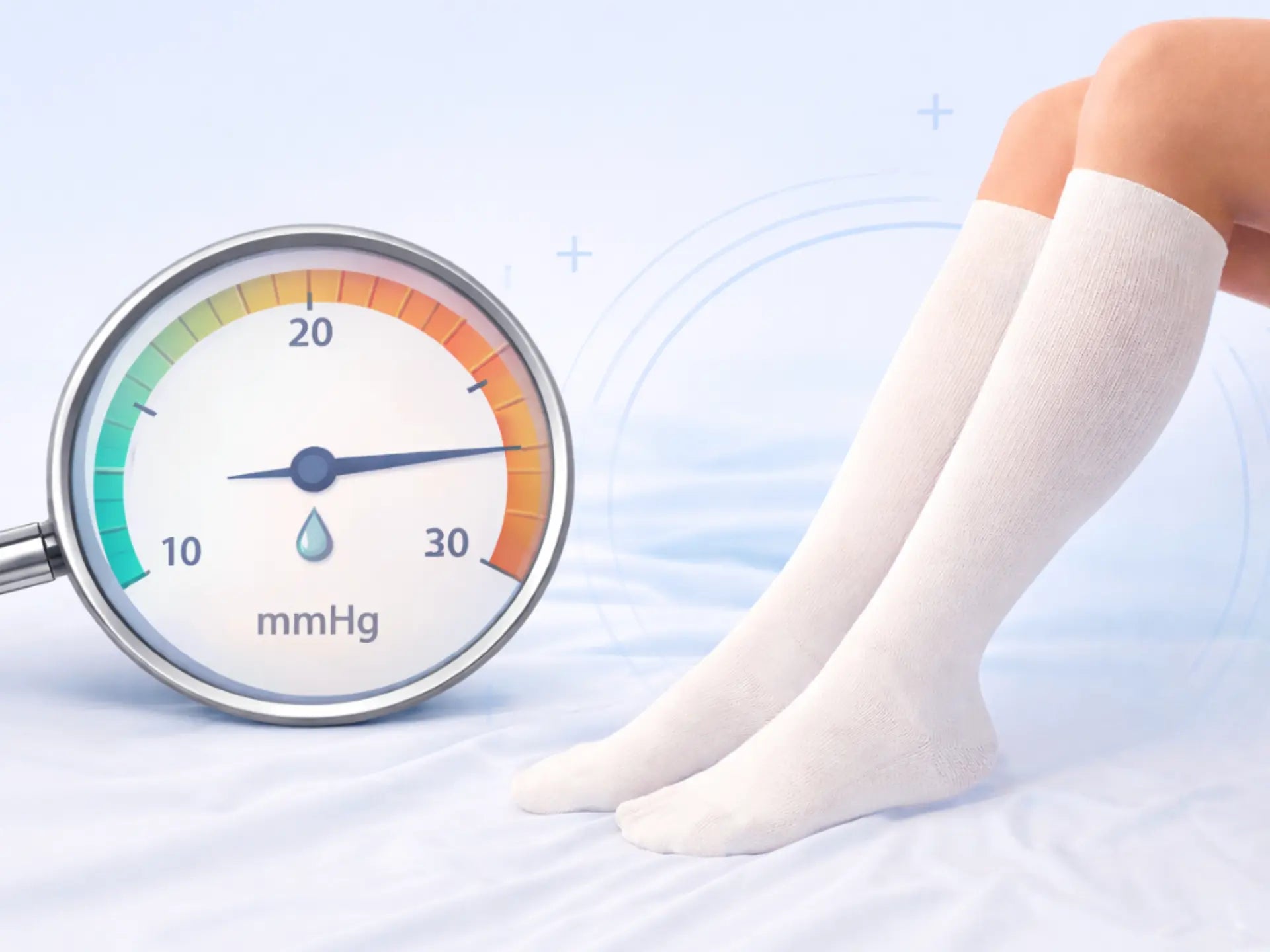
Yes, and this distinction matters. Light compression socks, typically in the 10–15 mmHg range, are designed for longer, more flexible wear. They’re easier to put on, less restrictive, and more forgiving with movement.
Stronger compression levels are a different category and often come with more specific guidance. For everyday comfort, light compression allows you to adjust wear time naturally based on how your body feels, rather than following rigid rules.
If you’re unsure how light compression fits into daily use overall, this guide on whether compression socks are good for everyday wear explains the broader context.
What comfort should feel like throughout the day
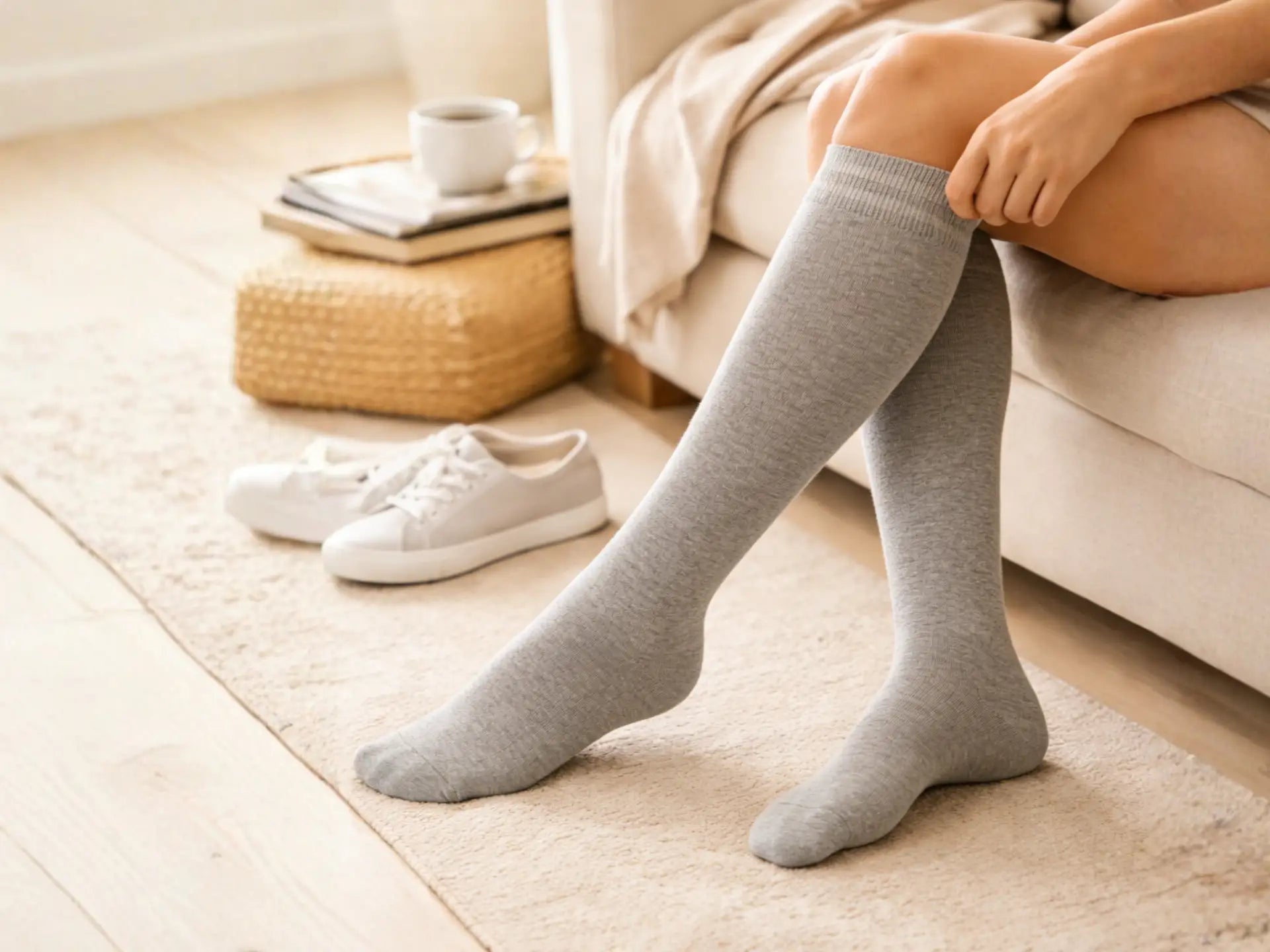
Throughout the time you’re wearing compression socks, comfort should remain steady. They should feel gently supportive at the ankle, relaxed through the calf, and easy to forget once you’re moving.
If you find yourself constantly adjusting them or thinking about taking them off, the issue is usually fit or wear time—not your tolerance. Proper sizing plays a major role here, and wearing socks that are too small can shorten how long they feel comfortable.
If sizing has ever felt unclear, this step-by-step guide on how to measure for compression socks can help prevent those issues.
Final take
There isn’t a single “correct” number of hours to wear compression socks in a day. For everyday comfort, most people benefit from wearing light compression during the parts of the day when their legs need support—and taking them off once that support no longer adds value.
Compression should work quietly in the background. When it does, you don’t need to think about how long you’ve worn it. When it stops feeling helpful, that’s your cue.
Frequently Asked Questions
How long should you wear compression socks in a day?
For everyday comfort, many people wear light compression socks for several hours during the most active or demanding part of their day, then take them off when they’re home and less active.
Do you need to wear compression socks all day?
No. Most people don’t need to wear compression socks all day for everyday comfort. If your legs feel fine later on, it’s normal to take them off.
Is it bad to wear compression socks too long?
If compression socks feel comfortable, wearing them for extended periods is usually fine. If they start to feel tight, warm, or irritating, that’s a practical sign to remove them and reassess fit or wear time.
When should you take compression socks off?
Many people take them off in the evening or once they’re no longer active. When you’re resting, compression often feels less necessary than during long periods of sitting or standing.
Does compression level affect wear time?
Yes. Light compression socks are designed for more flexible, longer wear in everyday routines, while higher compression levels may feel more restrictive and are often used in more specific contexts.